Thursday, January 31, 2019
Jae: Nature Communications (SCIENCE!)
I was checking out the policies and logistics behind Nature Communications, a peer-reviewed scientific journal publishing company. It was pretty cool to compare and contrast the process of a literature company (as the ones shown in the "What Editors Do", "Hothouse", and the thick packet given to us before) and that of a scientific journal company. Then again, Nature Communications publishes scientific articles so maybe that's the reason why they defer? I'm basing off my observation based on my thinking that the process for an article- regardless of the fact it is scientific or not- is different from a novel.

Mia Narciso: Classic Literature
I'm currently sitting in my Global Literature to 1500 course. Not sure what the guidelines for writing these posts are but we're just going to go for it. First of all, if I could drop this class I would, second of all (and perhaps more importantly) it's really making me think about our conversations about the classics and the survival of classical literature.
Do certain works gain more glory because they're old? Okay, yes, there is something interesting about The Iliad, and if I wasn't reading it for a class maybe I'd enjoy it more. I genuinely like stories about the Ancient Greeks and mythology because I had a huge Percy Jackson phase in middle school that I never really outgrew completely. But, we also place more value on some literature because it's a very direct window to the past. Maybe I'm just bitter because I'm incredibly unwilling to be here (I just glanced over to see what Tess is doing, and she too, is writing this post right now. Hi Tess).
It's interesting that we place so much value on "classic" literature and not so much on contemporary works, as least in an academic setting; I've read The Odyssey twice, Hamlet at least three or four times, and so on and so forth. I guess the point that I'm trying to make is that while they're important, they've been done before. As you change and grow, the way you view texts will do the same, but it can still feel pretty repetitive regardless. I've read 17th and 18th century literature about werewolves and manuals on how to be a "proper" woman which were just as compelling to me as Shakespeare (shout out to Professor Leslie, I love every class I've taken with her).
I guess part of the reason too is that as a teacher you need to read the book, process it, and then make a lesson plan out of it that's somewhat related to the curriculum. I'm also now wondering lucrative the classical literature publishing business is; how often are people buying these books? There must be so many copies lying around somewhere in the world.
I think I'm rambling and this post is becoming less and less related to class so I'm gonna stop here. This was very stream-of-conscious-in-class-not-paying-attention-but-kind-of? writing, I hope it made some sense.
Do certain works gain more glory because they're old? Okay, yes, there is something interesting about The Iliad, and if I wasn't reading it for a class maybe I'd enjoy it more. I genuinely like stories about the Ancient Greeks and mythology because I had a huge Percy Jackson phase in middle school that I never really outgrew completely. But, we also place more value on some literature because it's a very direct window to the past. Maybe I'm just bitter because I'm incredibly unwilling to be here (I just glanced over to see what Tess is doing, and she too, is writing this post right now. Hi Tess).
It's interesting that we place so much value on "classic" literature and not so much on contemporary works, as least in an academic setting; I've read The Odyssey twice, Hamlet at least three or four times, and so on and so forth. I guess the point that I'm trying to make is that while they're important, they've been done before. As you change and grow, the way you view texts will do the same, but it can still feel pretty repetitive regardless. I've read 17th and 18th century literature about werewolves and manuals on how to be a "proper" woman which were just as compelling to me as Shakespeare (shout out to Professor Leslie, I love every class I've taken with her).
I guess part of the reason too is that as a teacher you need to read the book, process it, and then make a lesson plan out of it that's somewhat related to the curriculum. I'm also now wondering lucrative the classical literature publishing business is; how often are people buying these books? There must be so many copies lying around somewhere in the world.
I think I'm rambling and this post is becoming less and less related to class so I'm gonna stop here. This was very stream-of-conscious-in-class-not-paying-attention-but-kind-of? writing, I hope it made some sense.
One of two because I forgot last week
Hello, first blog post.
I'm glad the blogging age has ended because I would have died a horrific death in that world. Not good at keeping a diary or remembering things or thinking other people care what I have to say.
Anyway.
After three years of avoiding it, I'm finally enrolled in Global Literature to 1500. It's really great as a reaffirmation that I should not have gone into Classics, but let's just say that if it was not a requirement, I would not be taking it. I hope it's not cheating to write about another class's reading. I probably won't do it again (except maybe for my Screenwriting class).
The problem with any Greek classic is that it's a translation. Even if it was modern Greek to modern English, it wouldn't get the nuance of the language quite right. (I had a brief stint as a combined Linguistics major and therefore I'm very, very qualified. Jokes.) Not to bash translators; it's hard and interesting work and they do great things for society, yada yada yada. But my eyes glaze over every time I open Trojan Women. And it has "women" in the title! It's about women! Sure, at the time this play was written, Greek families were still putting their newborn girls out on the porch to die overnight, but still. Women.
It doesn't help that I'm reading actually compelling plays for my Playwriting class. (Let's not judge my class choices, okay, I am ((like always)) trying to suppress winter depression through zany writing courses.)
I think my main problem is that I know all of these stories. I know about ancient Greece and Rome. I had to read the Oedipus trilogy in 9th grade. I been here, done that. I'd rather learn about other old dusty writers that I haven't studied before.
I think the silver lining of this course is that I know everyone in this class knows all their mythological stuff from reading the Percy Jackson books (which don't really fully adhere to classic Greek mythology) and my professor has no idea. Someone in class said 'naiad' and the look on his face...priceless. Also, he's a very nice professor and this scathing review of Classics is not reflective of him.
Okay okay okay, gotta go, see you later today for another post.
I'm glad the blogging age has ended because I would have died a horrific death in that world. Not good at keeping a diary or remembering things or thinking other people care what I have to say.
Anyway.
After three years of avoiding it, I'm finally enrolled in Global Literature to 1500. It's really great as a reaffirmation that I should not have gone into Classics, but let's just say that if it was not a requirement, I would not be taking it. I hope it's not cheating to write about another class's reading. I probably won't do it again (except maybe for my Screenwriting class).
The problem with any Greek classic is that it's a translation. Even if it was modern Greek to modern English, it wouldn't get the nuance of the language quite right. (I had a brief stint as a combined Linguistics major and therefore I'm very, very qualified. Jokes.) Not to bash translators; it's hard and interesting work and they do great things for society, yada yada yada. But my eyes glaze over every time I open Trojan Women. And it has "women" in the title! It's about women! Sure, at the time this play was written, Greek families were still putting their newborn girls out on the porch to die overnight, but still. Women.
It doesn't help that I'm reading actually compelling plays for my Playwriting class. (Let's not judge my class choices, okay, I am ((like always)) trying to suppress winter depression through zany writing courses.)
I think my main problem is that I know all of these stories. I know about ancient Greece and Rome. I had to read the Oedipus trilogy in 9th grade. I been here, done that. I'd rather learn about other old dusty writers that I haven't studied before.
I think the silver lining of this course is that I know everyone in this class knows all their mythological stuff from reading the Percy Jackson books (which don't really fully adhere to classic Greek mythology) and my professor has no idea. Someone in class said 'naiad' and the look on his face...priceless. Also, he's a very nice professor and this scathing review of Classics is not reflective of him.
Okay okay okay, gotta go, see you later today for another post.
Wednesday, January 30, 2019
Yaodi Luo: National Vanguard Books
I'm in a law class right now and in one of our readings, the United States of America v. Timothy McVeigh case is brought up. In this case, McVeigh made a giant fertilizer bomb and destroyed the Murrah Federal Building in Oklahoma City. In the reading though, it highlighted that he got his inspiration from the book The Turner Diaries, which is a fictional story containing a bombing against the federal government as well.
A quick google search of the publisher National Vanguard Books shows that they published similarly disturbing subject matter. How does a publishing house that specializes in that sort of material even make ends meet? Do they sell books through the sheer craziness of their books? And not only do the authors have to be somewhat odd, but the editors who work with them to bring those books into print must be similarly deranged too. The case reading also mentioned a book called Home-made C4, but I'm definitely not searching that on google.
A quick google search of the publisher National Vanguard Books shows that they published similarly disturbing subject matter. How does a publishing house that specializes in that sort of material even make ends meet? Do they sell books through the sheer craziness of their books? And not only do the authors have to be somewhat odd, but the editors who work with them to bring those books into print must be similarly deranged too. The case reading also mentioned a book called Home-made C4, but I'm definitely not searching that on google.
Tuesday, January 29, 2019
Evelyn Maguire: Editing Middle Grade
During my visit to Simon & Schuster two weeks ago, I met with an acquisitions editor for their Children's department, a very intelligent and frankly very intimidating young woman whose intense character was a definite juxtaposition to the colorful and zany books that surrounded her. When I asked about her current projects, she was exceptionally excited about an upcoming middle grade book to be released this spring: The Remarkable Inventions of Walter Mortinson by Quinn Sosna-Spear.

On my way out, she offered an advanced copy of this book that she was so excited about, asking me to read it and let her know what I thought. I'm currently about 3/4 of the way through The Remarkable Inventions, and what I keep thinking is that I have literally no idea how to judge a middle grade book. When I find the writing clever, I wonder if it's too clever for readers aged 8-12. When I find the book lacking in detail or character development, I wonder if it's because I'm used to adult literary fiction, and thus should lower my expectation.
The acquisitions editor was convinced that this book will be a huge success, so I can only assume as I read through this that I should be taking in every detail as something a middle grade author should strive for. Feeling so unsure of whether a book is good or not has made me realize the huge differences in genre, and as What Editor's Do points out, you have to well-read to be a great editor!
On my way out, she offered an advanced copy of this book that she was so excited about, asking me to read it and let her know what I thought. I'm currently about 3/4 of the way through The Remarkable Inventions, and what I keep thinking is that I have literally no idea how to judge a middle grade book. When I find the writing clever, I wonder if it's too clever for readers aged 8-12. When I find the book lacking in detail or character development, I wonder if it's because I'm used to adult literary fiction, and thus should lower my expectation.
The acquisitions editor was convinced that this book will be a huge success, so I can only assume as I read through this that I should be taking in every detail as something a middle grade author should strive for. Feeling so unsure of whether a book is good or not has made me realize the huge differences in genre, and as What Editor's Do points out, you have to well-read to be a great editor!
Monday, January 28, 2019
Dbo: Thoughts on the Paris Review
I enjoyed reading the Paris Review packet more than I thought I would. The writers' perspectives on Gottlieb juxtaposed with his own thoughts on editing were well organized and flowed easily. As a writer myself, I found myself wanting an editor like Gottlieb - only I would rather he not call me "dear boy". To me, the most exciting thing about having an editor like Gottlieb is his straightforwardness and his desire to enjoy the work. For the most part, he edited books he enjoyed so that he could enjoy them more fully, and he put significant effort into each project. His perspective seemed to differ from Scott Norton's in chapter 8 of What Editors Do. Norton seemed to focus more on acquiring books for their monetary potential (p. 88 "Think 'quantitatively', Roessner says. She asks herself, Do I think I can expand a book's sales potential enough to warrant the investment of time that development would require?") rather than their literary merit. Norton also specifies market knowledge as one key asset good editors bring to their role. Despite these different perspectives, both Norton and Gottlieb make the same claim that editing is not a learned trade; it's a gift not everyone is awarded.
Jade: Where is the F in FSG?
Kachka begins Hot House by describing Straus and Giroux's memorial services. My initial response was, what about Farrar? Even now after finishing the book I am still questioning Farrar's significance at FSG. He was barely mentioned, overshadowed by Straus's personality, Giroux's talent, and Galassi's success. Was his sole contribution to the company his support of Straus during the first few years? Even at the end of the book he isn't mentioned, as though his influence on the company had died out a long time ago. In my opinion, this is just one example of how unbalanced Hot House was to read. Particularly within chapters, there wasn't any building momentum, but plenty of slightly related anecdotes. As we discussed in class, there was also an odd tension between FSG's record as a publishing house and Straus's personal life. It's a fair argument to say that both are needed to understand FSG's legacy, but I think the two subjects could have been merged more neatly. Many times as the book progressed I wondered if the sexy parts were included simply to make the book more appealing, more sellable, an ironic opposition to FSG's literature. I believe that Straus's intense, dominating character would have come across just as plainly without the snippets of gossip Kachka included from FSG workers. Tangentially, I also found it interesting that a decent amount of FSG editors and assistants were women—is this a normal trend in publishing houses? Has it always been like this?
Anna: Book Adaptations and If Beale Street Could Talk
 |
| If Beale Street Could Talk, written by James Baldwin and published by Knopf Doubleday Publishing Group |
We emerged from the movie feeling a bit duped. The visuals of the film were phenomenal, and the story that the movie works to tell is important and has the chance to be quite hard-hitting, but we both felt that the dialogue and narrative of the film fell flat, and that conflicts between characters went underdeveloped and didn't leave the impact that they could have. The movie was steeped in emotion, intimacy, and tension, but none of that potential energy amounted to anything substantial in the plot. It left something to be desired, and we both agreed that the "something" we were looking for might have only been found in the novel and couldn't have been translated for the screen.
I think part of this missing thing is a level of articulation of the inner thoughts of the main character, Tish. As the narrator of the movie, Tish's voice introduces us to the conflict of the film and acts as a guide to provide context and explain jumps in time. However, Tish's voice is never used to articulate her feelings of conflict, elation, or devastation. This is to be expected, since watching a movie that is mostly narration would be torture, but the rest of the movie didn't rise to the responsibility of conveying the development of Tish and the other characters. The novel, on the other hand, is able to take as much time as it needs developing the world it's creating, and Tish, as the narrator of the novel as well, has a chance to explain her story and what she is feeling in a much more developed way. The story is so emotionally driven that adapting it into a film stripped it of what it could convey.
This disappointment reminded me of our discussion of Call Me By Your Name, which I actually just finished reading after watching the movie during winter break. Initially, I thought the movie was fine and was an interesting story to watch unfold, but after reading the novel, I'm mad about what the filmmakers left out, and I feel that, ultimately, they failed the book. The novel is narrated by Elio, the young protagonist of the novel, and through his narration you learn every. single. detail of what this young man is feeling and thinking about his developing relationship with Oliver. It provides a level of context and intimacy with the story that the movie just can't communicate. The relationship between the two men in the movie versus in the novel are too totally different representations. They can still both be valued, but it almost seems unfair to call one an adaptation of the other.
Looking at both of these movies, it makes me wonder if novels like these, that deal mostly with an emotional stream of consciousness from the narrator, can be successfully turned into films. Are there any examples of such adaptations out there?
Jae: International Publication
Currently reading a Korean book that can be roughly translated to "When the Moon Embraces the Sun". It's a historical fiction novel about a Prince and a servant/shaman set in the time in ancient Korea. Out of curiosity, I checked the pages with information about the publishing companies. Apparently, the publishing company's name can be translated to "Blue Books". Unfortunately, I am not particularly knowledgable about the publishing companies in Korea. But from experience, there are a lot of independent and small business bookstores in comparison to the U.S. Thinking about how similar and different are publishing companies are internationally.
Marisa: foreign rights?
I am interested if it is common for writers to sell their global rights immediately or if it's just rights for the US at first or are English rights the rights for publishing their book in the English language to be sold worldwide?
I am interested in researching this as I was living abroad the Fall semester and always found it interesting which English language books the book store's foreign or international section had. I found that most bookstores would have a small English language shelf on which would be self help books, memoirs, business books and such and if there was any fiction it would be Dan Brown novels and the like- the sort of popular books you can find at a airport and then kids classics like a boxed Harry Potter Set or something for even younger readers. To summarize: it wasn't exactly contemporary fiction - for that I went to a Independent English language bookstore which had a hodgepodge of discarded novels, offered some new books of specific genres and oddly enough had a very well put together poetry section - I had found out about this store from a recommendation from a book club I had joined and as they put it finding the store and going to the store in itself was an experience. I'm sorry I've gone on a tangent - point is- how do these books end up there? Why do some not so well known books here make it around the world while others perhaps more popular do not?
I am interested in researching this as I was living abroad the Fall semester and always found it interesting which English language books the book store's foreign or international section had. I found that most bookstores would have a small English language shelf on which would be self help books, memoirs, business books and such and if there was any fiction it would be Dan Brown novels and the like- the sort of popular books you can find at a airport and then kids classics like a boxed Harry Potter Set or something for even younger readers. To summarize: it wasn't exactly contemporary fiction - for that I went to a Independent English language bookstore which had a hodgepodge of discarded novels, offered some new books of specific genres and oddly enough had a very well put together poetry section - I had found out about this store from a recommendation from a book club I had joined and as they put it finding the store and going to the store in itself was an experience. I'm sorry I've gone on a tangent - point is- how do these books end up there? Why do some not so well known books here make it around the world while others perhaps more popular do not?
Sam: Recap of The Art of Editing & Open-Heart Surgery or Just a Nip and Tuck?
I thought this excerpt from What Editors Do was a lot more informative of the detailed work acquisitions editors have to do than Karp’s “follow your gut” advice. Norton enumerates three things an editor needs in order to excel at their job: subject expertise, market knowledge, and the needs of a books target reader. Time and resources seems to be a contention for all editors. They have to decide which projects to dedicate more time to, to model or coach their draft, to skim or read chapters line by line. It almost all depends on their belief in the project’s ability to succeed.
My question is how Gottlieb was able to manage working for free for Knopf? How was his settlement so big from the New Yorker, and is a settlement like that common when leaving a big magazine or publishing company?
I think Gottlieb’s take on how the editor should remain invisible is an interesting take. I have always felt they should get lauded by their authors, especially if they made detailed, helpful edits. But, I also see his point. The general interest reader maybe does not need to know that the editor suggested the character they liked get killed off or they encouraged cutting a chapter of the story.
Authors also react well to him, eventually realizing that even if they initially disagreed, his edits make the novels better. Gottlieb seemed to have a deep comprehension of what authors wanted. He was rare in the publishing world, oftentimes doing read-throughs overnight and giving authors comments the next day. I doubt this is still the case anymore but in rare circumstances. Somehow, he also seemed to know what every individual author needed. The author of The Power Broker for example, was contracted to write a book he didn’t want to and wanted to pursue writing volumes about LBJ. Gottlieb suggested the idea before Robert Caro even approached him.
My favorite quotes:
“Your job as an editor is to figure out what the book needs, but the writer has to provide it”
“But I dislike writing: it’s very very hard, and I just don’t like the activity. Whereas reading is like breathing”
“I happen to be a kind of word whore”
Sunday, January 27, 2019
Sebastian: That link I couldn't find
Remember that link I couldn't find in class? You know, the one that killed the momentum and left us in kind of a lull?
I found it.
It's not much, just a rough chart of the two dozen or so acquisitions big publishers made in 2018, along with a note of why they made the purchases or how much they paid. I found it mildly interesting.
I found it.
It's not much, just a rough chart of the two dozen or so acquisitions big publishers made in 2018, along with a note of why they made the purchases or how much they paid. I found it mildly interesting.
Friday, January 25, 2019
Sara: Favorite Quotes from The Alquemy of Acquisitions
These are some of the quotes that struck me out:
"In other words, a book editor can succeed three times out of ten and feel like a professional loser, while an investor can succeed three out of ten and become a billionaire" - I thought this gave a pretty good overview of how personal can become the acquisition and editing of a book. At the end, you might end up feeling like it is part of yourself and the fact that it didn't succeed might be translated to the feeling of not doing a good job, while a businessman might move on the second it does not work out because for him/her the opportunity itself was the one that failed, not his/her ability to do the job.
"I once asked Jamie Raab, a publisher at the Hachette Book Group, why she had the confidence to spend a vast sum to acquire a first novel. She responded, 'I cried at the last page'" - For me if a book makes me cry it makes it the defining factor to make the book to stand among my favorites. The fact that we reach such a level of empathy with characters that we do not see, that only exist among words, and that make us feel for them as if they are our own beloved ones makes the existence of books a divine event.
"Yet every now and then, we will read something that knocks us out and enlightens us or moves us or elevates us in a way no other book has quite done. And it will all be worth it" - Again, books are the best. Not all of them, as we have discussed in class, but it is also such a subjective feeling. What might be the best for me, can be the worst for others. I quite appreciate that about books, there is always going to be one for every type of reader. Among hundreds of books that one can read, there is always going to be the book, and that feeling when one finds it is what makes the search so worth it.
"In other words, a book editor can succeed three times out of ten and feel like a professional loser, while an investor can succeed three out of ten and become a billionaire" - I thought this gave a pretty good overview of how personal can become the acquisition and editing of a book. At the end, you might end up feeling like it is part of yourself and the fact that it didn't succeed might be translated to the feeling of not doing a good job, while a businessman might move on the second it does not work out because for him/her the opportunity itself was the one that failed, not his/her ability to do the job.
"I once asked Jamie Raab, a publisher at the Hachette Book Group, why she had the confidence to spend a vast sum to acquire a first novel. She responded, 'I cried at the last page'" - For me if a book makes me cry it makes it the defining factor to make the book to stand among my favorites. The fact that we reach such a level of empathy with characters that we do not see, that only exist among words, and that make us feel for them as if they are our own beloved ones makes the existence of books a divine event.
"Yet every now and then, we will read something that knocks us out and enlightens us or moves us or elevates us in a way no other book has quite done. And it will all be worth it" - Again, books are the best. Not all of them, as we have discussed in class, but it is also such a subjective feeling. What might be the best for me, can be the worst for others. I quite appreciate that about books, there is always going to be one for every type of reader. Among hundreds of books that one can read, there is always going to be the book, and that feeling when one finds it is what makes the search so worth it.
Thursday, January 24, 2019
Tom: Thoughts on Acquisitions
Who would have thought the For Dummies series was born out of the need for someone to learn about DOS? It was interesting to see how a relatively niche computer science topic could have sparked such a successful publishing phenomenon.
I also noticed how in Rule 6, it states that acquisition editors should stay away from sequels, especially they are memoirs. This made me think of Jay and his disdain for memoirs -- Jay, have you ever tried a sequel to a memoir? I wonder how many of these exist?.
My favorite excerpt from the reading: "An agent once submitted a book proposal on procrastination to me, and I decided not to acquire it on the assumption that readers would never get around to buying it."
I thought this was pretty hilarious, but it was quite interesting to see the unique perspectives some of the acquisition editors must possess to effectively choose what to acquire.
Megan: Buying Books?
Casting around for a subject for a test post, I came back to the syllabus and the mentioned example column, about "books he's purchased and the books he's read (which are not usually the same)" and the phrase brought me to thinking about how I really don't buy books, anymore. I'll rent, if I can, whatever the required course materials are. For anything else, I'll get it from a library or, increasingly, write down the book in my phone's notes on my "things to read" list and let it languish there with other things to read for months or years. Between all of my classes, I sometimes have trouble wanting to read for fun. I'd love to buy books - I love the feeling of a new book in my hands - but it's so hard for me to justify. What if I don't like it? What's my plan for getting rid of it - where am I going to give it away if I don't like it? My likes and dislikes are so variable that I don't really know what my tastes are anymore. It feels frivolous to buy something without a guarantee that I know and trust the author, or have read this already and want my own permanent copy, or I'm really confident I'll like the subject material.
I wonder what side of the divide people tend to fall on - buying things they often don't get around to reading, or not buying things that they probably would read and like.
I wonder what side of the divide people tend to fall on - buying things they often don't get around to reading, or not buying things that they probably would read and like.
Yaodi Luo: Joan Didion
I was watching the 2018 iteration of A Star is Born directed by Bradley Cooper and during the credits, it flashed Joan Didion's name as having been one of the people to write the 1976 version's screenplay. I don't really know famous writers well, her name stuck out because I remember we read some of her work before in another class and she was mentioned in chapter 8 of Hothouse. Kind of interested if it's a common thing for academically acclaimed writers to do screenplays on the side.
Also the movie was pretty good, never liked Lady Gaga that much but the movie changed my mind. She's pretty cool.
Also the movie was pretty good, never liked Lady Gaga that much but the movie changed my mind. She's pretty cool.
testing testing 1 2 3
My favorite quote so far from What Editors Do:
"...all editors' accounts of their work take the form 'So I said to him, "Leo! Don't just do war! Do peace too!'"
"...all editors' accounts of their work take the form 'So I said to him, "Leo! Don't just do war! Do peace too!'"
Evelyn Maguire: New EL James Book — Just in time for Mother's Day!

It was just announced that EL James, the author of the iconic, sexified Twilight fan fiction 50 Shades of Grey, is officially releasing her next novel, The Mister, on April 16 of this year — Lucky us!!! The book will be published by Vintage, an imprint of Penguin Random House. The Mister will also be produced as an audiobook — if you're the kind of person who enjoys their literary porn huskily whispered into your ear at the gym.
So I know, I know, you're all dying to know: What's The Mister all about?! This contemporary romance takes place in London, and is a "Cinderella story for the twenty-first century," according to the author. Our leading man is the aristocratic Englishman Maxim Trevelyan (what are the odds that name came from an internet name generator?), who becomes helplessly entranced by troublesome Alessia Demachi, a skint-broke new arrival in London with a ~ dangerous ~ past. Erotic readers love nothing more than some misogynistic power dynamics, am I right ladies?
With one of the largest fan bases in the world (50 Shades of Grey sold over 150 million copies), EL James is sure to have no trouble snagging the #1 bestseller spot yet again. In the literary balance of "What is good?" and "What will sell?" James's work is a perfect example of the scales tipped towards commercialism. Did the plot of 50 Shades of Grey literally ever make sense? No. Was it well-written? Not in the slightest. Was is originally just a porno version of Twilight? YES. Yet it became a phenomenon.
While I certainly don't look to EL James as a literary great in any means, it's undeniable that she knows her market, and can write each and every dirty detail that her readers want. Keep an eye out for The Mister — I'm sure you'll see it in the hands of every middle-aged woman on public transportation in just a few months.
Wednesday, January 23, 2019
Sam: Difficult Women
Difficult Women contains a collection of short stories focusing on women in varying states of their lives who come from a multitude of different backgrounds. The stories span from women who are pinnacles of privilege to women who have gone through sexual assault to those who are in crumbling marriages.
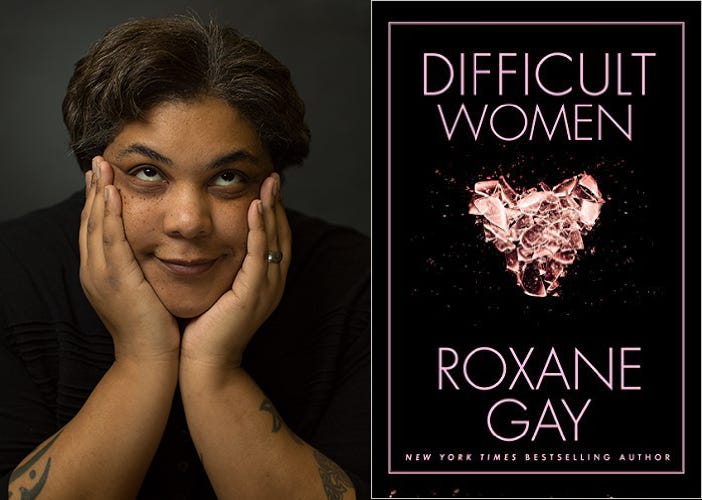
Somehow, Gay creates unique voices for the women in each chapter. She constructs tangible, realistic worlds within the breadth of a few pages. Her prose is sharp, her stories intriguing, and her characters distinct. Yet, each story is overwhelmingly dismal and I seem to miss the glimpses of humor more prevalent in Bad Feminist. I was hoping for at least one or two stories where sex was not a major theme, and character development would occur (unfortunately, not the case so far). I think I am finding I like Gay more as a cultural critic than a fiction writer. For now, I’ll keep reading.
Tuesday, January 22, 2019
Jess Rouzan: Sweetbitter
In the category of shows I've been watching because of books I've read (the only reason I have ever watched a show on Starz) I finally watched the first season of Sweetbitter.
Sweetbitter is filled with the kind of characters that make you say "this is painful to read" and "this content is not relatable." It's a coming of age story about a young woman (Tess) who moves to New York with nothing but an English degree and the clothes on her back. With no goals in mind, she becomes a server at a high-end restaurant and you, the reader, get to watch her make mistakes for 356 pages. I don't doubt that it was well-written, but I suffer from second-hand embarrassment and the author seemed to be purposefully exploiting that. Alfred A. Knopf gave Stephanie Danler a sweet sweet six-figure, two-book deal AND a TV show.

Sweetbitter had mostly excellent reviews. I'm just increasingly convinced it also had a mostly excellent marketing team. Those juicy restaurant industry tidbits probably had something to do with it. And just look at that millennial pink minimalist cover! Who wouldn't want to pick that up for the explicit purpose of posting about it on Instagram? And look at all of these articles that have come out about Stephanie Danler, debut author. I'll be curious to see if her second book causes as much of a stir.
The show featured similar levels of intrigue and secondhand embarrassment but with the added bonus of bad acting. But it's renewed for season two, so I guess something is clicking?
Sweetbitter is filled with the kind of characters that make you say "this is painful to read" and "this content is not relatable." It's a coming of age story about a young woman (Tess) who moves to New York with nothing but an English degree and the clothes on her back. With no goals in mind, she becomes a server at a high-end restaurant and you, the reader, get to watch her make mistakes for 356 pages. I don't doubt that it was well-written, but I suffer from second-hand embarrassment and the author seemed to be purposefully exploiting that. Alfred A. Knopf gave Stephanie Danler a sweet sweet six-figure, two-book deal AND a TV show.

Sweetbitter had mostly excellent reviews. I'm just increasingly convinced it also had a mostly excellent marketing team. Those juicy restaurant industry tidbits probably had something to do with it. And just look at that millennial pink minimalist cover! Who wouldn't want to pick that up for the explicit purpose of posting about it on Instagram? And look at all of these articles that have come out about Stephanie Danler, debut author. I'll be curious to see if her second book causes as much of a stir.
The show featured similar levels of intrigue and secondhand embarrassment but with the added bonus of bad acting. But it's renewed for season two, so I guess something is clicking?
Test Post
This is my first time using Blogger, so it's nice to have a chance to figure out how this works.
After this weekend's reading, I really want to rewatch Mad Men. I always thought that kind of office depiction was an exaggeration of the 1960s', but based on the history of FSG, it seems to be legitimate.
After this weekend's reading, I really want to rewatch Mad Men. I always thought that kind of office depiction was an exaggeration of the 1960s', but based on the history of FSG, it seems to be legitimate.
Monday, January 21, 2019
Test Post
Just giving this a try. In honor of the Patriots win this Sunday, I looked up Tom Brady's book The TB12 Method: How to Achieve a Lifetime of Sustained Peak Performance on Amazon. It was published by... Simon & Schuster.
Jade: Brookline Booksmith
Brookline Booksmith—a more spacious Trident. Bonus: their stationary section is gold. This is where I bought the Vintage Classics version of What We Talk About When We Talk About Love. It was sitting on a display table with a yellow sticker on its cover that said "SALE: $6.99". The name Raymond Carver sounded familiar and important, but I was probably thinking of Raymond Chandler, one of my favorite detective novelist. Picking up the paperback, its thin profile felt just right in my hand.
On a separate note, going back to Betsy Lerner, I was really surprised by how reliant some writers are on their editors. I would expect writers to want full independence in the writing process; it's hard for me to believe that a writer would rather listen to the voice of their editor than their own.
On a separate note, going back to Betsy Lerner, I was really surprised by how reliant some writers are on their editors. I would expect writers to want full independence in the writing process; it's hard for me to believe that a writer would rather listen to the voice of their editor than their own.
Saturday, January 19, 2019
Jae: Test Run- Is this how it works?
Experimenting a test-run so that I can see how this works... I'm glad Grammarly can still function so that it can save my life. Also learned how to properly pronounce Giroux after the class.
Gotta Love Giroux
Can we talk about Giroux a little bit? We barely mentioned him in class, and I enjoy reading about him more than Straus. If I ignore his harsh comment against mothers on page 90, I find Giroux almost endearing; he seems genuine. Although he works with his writers in a professional context, he seems to see them and care for them as friends. I never would have expected the publishing industry to foster such personal relationships between people. Considering how many of Giroux's authors opted to stay with him or switch publishing houses to continue working with him, makes me wonder if these personal connections were rare in the industry. I also wonder if these kinds of relationships have become more scarce in today's publishing world.
Tuesday, January 15, 2019
Welcome!
Welcome to our course blog.
This is my first time using blogger, but it can't be worse than blackboard, right?
This is my first time using blogger, but it can't be worse than blackboard, right?
Subscribe to:
Posts (Atom)